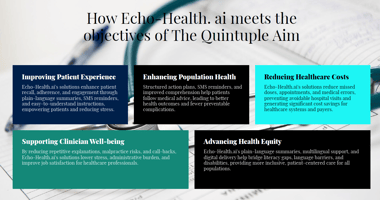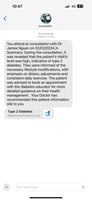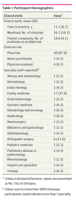
Echo-Health.ai proudly announces the results of a recent independent study published in JAMA...
How Ambient AI Supports Mobile Healthcare
It's 8pm. You've just finished assessing eight residents at the aged care facility. Each needs comprehensive documentation. Your options? Scribble abbreviated notes and type them up tomorrow morning (hoping you remember the details), or sit in your car for the next hour with your laptop balanced on the steering wheel.
GPs spend 14% of their session time documenting consultation notes and updating electronic health records CSIRO PUBLISHING—and that's with full practice infrastructure. For physiotherapists doing facility rounds, nurse practitioners on after-hours home visits, occupational therapists conducting assessments, or any clinician working outside traditional clinic settings, the documentation burden becomes overwhelming.
The alternative many clinicians resort to? Cut-and-paste from previous notes, abbreviated documentation from memory, or hours of catch-up typing that contributes directly to burnout.
Two Approaches to Ambient AI
Ambient AI promises to solve this—capturing clinical conversations and generating documentation automatically. But the architectural approach matters enormously.
Traditional model: Vendor stores everything—patient names, demographics, medical history, consultation audio—in their database. Your patient data exists in two places: your clinical system and the vendor's cloud.
Data minimization model: Patient identifiable information never leaves your practice system. The AI queries your system for clinical context, processes the consultation, and writes documentation directly back. No patient names, addresses, or Medicare/NHI numbers stored by the vendor.
Where It Matters: The Referral Letter
Consider a common scenario: You're seeing a patient who needs specialist referral. That referral requires patient demographics, your provider details, the specialist's information, clinical history, current medications, and the reason for referral.
Critical question: Where does each component come from?
If your ambient AI vendor stores patient demographics, provider details, and medical history in their database, you've created a parallel patient record system. When you switch vendors, that data needs extracting. When there's a breach, it's all exposed.
With proper architecture, each component comes from its authoritative source: patient information from your practice management system, provider details from your directory, clinical context via FHIR API. The AI contributes only today's clinical reasoning. With healthcare data breaches costing an average of $9.77 million per incident and patient health records 10x more valuable than credit card data on the dark web Amzur Technologies, minimizing what's stored elsewhere matters.
Real Impact for Mobile Clinicians
Residential aged care providers across Australia and New Zealand need staff to capture and retrieve integrated resident and clinical information at the point of care using mobile devices Telstra Health. Whether you're a physiotherapist at a facility, a nurse practitioner doing after-hours calls, or any clinician working in community settings, you need:
- Clinical context accessible on your mobile device
- Medication safety checking in real-time
- Documentation that writes directly to your clinical system
- No laptop, no typing sessions, no documentation backlogs
With integrated medication database checking, you get real-time drug interaction alerts. With FHIR connectivity, you access patient medication lists and allergies without storing them. With direct write-back, your documentation is immediately available to the care team.
Echo-Health's Approach
Echo-Health implements this data minimization architecture:
- Patient demographics retrieved from your practice system, never stored
- Clinical context accessed via FHIR but not retained
- Medication safety database integration for interaction checking
- Documentation writes directly to your system
- De-identified transcripts retained for 7 days only (reducible on request)
- Works on mobile devices across aged care facilities, home visits, urgent care
With concerns about data security and data leaving the country prominent among providers in both Australia and New Zealand Healthcare IT News, the architectural choice matters.
Your patient data stays in your clinical system. Echo-Health provides the capability. You maintain control.
No more typing in cars. Just comprehensive documentation wherever you practice.
Echo-Health: Built for clinicians who work everywhere.